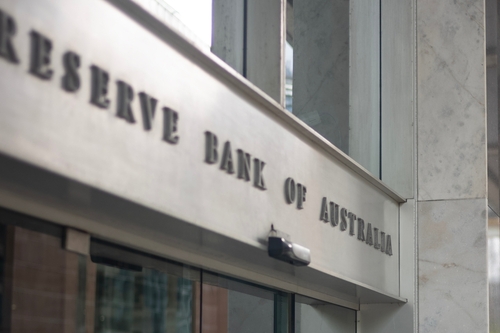
The RBA is fighting the wrong fire.
The Reserve Bank of Australia has raised the cash rate three times in 2026 — from 3.60% to 4.35% — while most major central banks have been cutting or holding. The stated rationale is familiar: inflation is above the 2–3% target, the labour market is tight, and — in Governor Bullock’s words — “demand is outstripping supply.” The headline CPI number, at 4.6% to March, looks alarming. But look one layer beneath the headline, and the picture changes. The inflation the RBA is fighting is overwhelmingly driven by housing and fuel — two components that do not respond to interest rate hikes. One is a supply shortage. The other is a geopolitical price shock. Neither is cured by making mortgages more expensive.
The numbers behind the headline.
The March 2026 CPI print of 4.6% sealed the case for the May hike. But composition matters more than the headline. Every category driving the overshoot — housing (+6.5%), transport (+8.9%), electricity (+25.4%), education (+4.8%) — is supply-driven, import-driven, or regulated. The demand-sensitive categories the RBA can actually influence — furnishings, communications, recreation — are already running at or below the 2–3% target band. The trimmed mean sits at 3.3%, barely 30 basis points above target. Three rate hikes to address a 30-basis-point overshoot, when the demand side is already subdued, is a policy tool aimed at the wrong target.
Research from the Federal Reserve Bank of San Francisco confirms this directly: rate hikes reduce demand-driven inflation but have “negligible” effect on supply-driven inflation [1].
The tool does not fit the problem.
As stated, Australia’s inflation is predominantly supply-driven. The housing crisis is a construction supply problem: immigration has surged, planning constraints have tightened, and the construction labour force cannot keep pace. Raising rates makes this worse. Higher rates increase mortgage costs, which flow directly into higher rents — pushing up the very CPI component the RBA is trying to control. Higher rates squeeze developer margins, reducing construction starts, tightening supply further. The RBA is prescribing a medicine that worsens the symptom it is supposed to treat.
Fuel prices are even more clearly beyond reach. The price of oil is set by OPEC and Middle Eastern conflict dynamics. Governor Bullock herself acknowledged that higher petrol prices were not the reason for the rate decision — yet petrol is a major reason headline CPI jumped from 3.7% to 4.6% in a single month.
The RBA’s best defence — and why it is thin.
The strongest argument in the RBA’s favour comes from the Bank for International Settlements. The BIS position is nuanced: central banks should attenuate their response to supply shocks, and “looking through” them is optimal when inflation expectations are anchored. But if expectations risk de-anchoring, a stronger response is warranted [2].
The question is whether Australia has reached that threshold. The RBA’s own evidence says it has not. The May 2026 Statement on Monetary Policy confirms that “financial market measures of long-term inflation expectations remain anchored around the midpoint of the inflation target.” Long-term expectations “respond little to the latest inflation outcomes.”
The Federal Reserve faces a structurally similar situation — supply-driven inflation from tariffs, near-term expectations elevated, long-term expectations anchored. Chair Powell has stated that “longer-term inflation expectations remain well anchored.” The Fed’s response: hold rates steady. The RBA faces the same evidence, cites the same anchoring in its own publications, and hikes three times.
One of these responses is inconsistent with the framework both institutions claim to follow.

The damage is real.
Research from the e61 Institute found that most Australian mortgage holders do not cut spending in response to higher rates — they adjust savings and absorb the pain [3]. If consumers do not reduce spending, the hikes do not reduce demand, and the inflation-fighting mechanism does not engage. The hikes transfer wealth from borrowers to savers and bank margins without cooling the economy.
The damage, however, lands. A third hike pushes monthly repayments up $90 to $150 for a typical borrower, pushing an estimated 1.5 million households into mortgage stress [4]. Wage growth at 3.25% against CPI of 4.6% means real wages have declined 1.35%. GDP growth is forecast at 2%. Unemployment sits at 4.3%. This is not an overheating economy. It is an economy being squeezed by supply constraints, with rate hikes adding to the squeeze.
Australia is now a global monetary policy outlier while the case for Australian exceptionalism is thinner than the RBA’s public statements suggest.
Is the target itself still relevant?
The RBA’s 2–3% target was adopted in 1993. The economy it was designed for — goods-dominated CPI, infrequent supply shocks, limited global price transmission — no longer exists. Recent academic work argues that inflation targeting’s core flaw is its inability to distinguish demand from supply shocks, and that alternative frameworks such as nominal GDP targeting handle supply shocks automatically by focusing on total spending rather than the price level [5][6]. The BIS itself has acknowledged the world may have entered “an era of supply-driven macroeconomics” where geopolitical fragmentation and energy transition act as chronic cost pressures.
Since 2020, supply shocks have been continuous: pandemic, Ukraine, Iran, semiconductors, shipping, climate. A framework that treats them as exceptions is miscalibrated when they are the norm.
The rigidity with which the target is being enforced — three hikes in five months for a 30-basis-point trimmed mean overshoot, with the May decision passing 8–1 despite the same supply-driven composition and anchored expectations — suggests institutional momentum serving credibility more than economic need.
When does this stop?
The RBA will not stop because households are stressed. It will stop because households start losing jobs. Mortgage stress bends the system; unemployment breaks it.
Australia’s mortgage system has deep buffers — arrears remain under 1%, a fraction of the 9% reached in the US during the GFC. Full recourse lending and offset accounts mean the system absorbs rate hikes without a default cascade. The RBA knows this, which is why mortgage stress headlines do not change the board’s calculus.
What changes the calculus is the labour market. Monetary policy operates with a six-to-nine month lag. The February and March hikes have not fully transmitted yet — their impact on employment arrives in Q3 to Q4 2026. If unemployment crosses 4.5% by late 2026, the institutional bias toward hiking collides with the mandate for full employment. If employment growth turns negative for two consecutive months, the institutional reflex snaps. The March vote was 5–4 — half the board ready to pause. By May, 8–1 showed institutional momentum had taken over. That momentum carries until the labour market forces a reversal. The most likely inflection window is Q4 2026 to Q1 2027 — when the full weight of three rate hikes in four months lands on an economy growing at 2% with flat productivity and negative real wages.
The final irony.
The entire justification for aggressive tightening rests on the risk that inflation expectations could de-anchor. The RBA’s own data says they haven’t. The BIS framework says that when expectations are anchored, the correct response to supply shocks is to look through them. The Federal Reserve reads the same evidence and holds. The RBA reads the same evidence and hikes. Three times. The air conditioning is on full blast, the window is wide open, and the thermostat the RBA is watching says the room is fine.
Appendix: Academic and empirical evidence base
This appendix provides the research foundations cited in the main article. Each section maps to a specific claim made above.
A1. Rate hikes do not reduce supply-driven inflation.
The San Francisco Fed’s Shapiro (2022, updated 2025) developed a decomposition framework splitting core inflation into supply-driven and demand-driven components across 100+ categories of goods and services. The key finding: “a monetary policy shock that tightens policy acts to reduce demand-driven inflation but has no significant effect on supply-driven inflation.” The demand-driven contribution to US core inflation declined approximately 2 percentage points during 2022–2024 due to Fed tightening. The supply-driven contribution was unaffected.
A separate SF Fed working paper (2025) on state-dependent transmission found that markets and investors perceive tightening as less persistent and less effective during supply-driven inflation episodes — the market itself prices in the tool-mismatch that central banks are slow to acknowledge.
Tenreyro (2023), in a paper presented at the ECB Forum, argued that tightening into supply shocks amplifies output loss without meaningfully reducing the price impact. Her analysis was influential in the Bank of England’s decision to pause its tightening cycle earlier than expected.
References:
[1] Shapiro, A.H. (2025). “Does Monetary Policy Tightening Reduce Inflation?” FRBSF Economic Letter 2025-02.
• Shapiro, A.H. (2022). “Decomposing Supply and Demand Driven Inflation.” FRBSF Working Paper 2022-18.
• SF Fed (2025). “Not All Inflation Is the Same: State-Dependent Transmission of Monetary Policy.” Working Paper 2025-11.
• Tenreyro, S. (2023). “Monetary policy in the face of supply shocks.” ECB Forum on Central Banking.
A2. The BIS “look through” framework and the expectations anchor.
The BIS December 2024 Quarterly Review proposed “targeted Taylor rules” that differentiate monetary policy responses to demand- versus supply-driven inflation. The core position: central banks should attenuate their response to supply shocks when inflation expectations are anchored, and pivot to a stronger stance only if expectations risk de-anchoring. An October 2024 BIS speech stated the optimal strategy is to “initially look through supply shocks until a threshold is reached, then pivot discontinuously to a more hawkish anti-inflationary stance.”
The RBA’s May 2026 Statement on Monetary Policy confirms: “Financial market measures of long-term inflation expectations remain anchored around the midpoint of the inflation target.” Survey and market measures are “broadly stable.” By the BIS’s own framework, the condition for looking through — anchored expectations — is met.
The Federal Reserve, facing supply-driven tariff inflation with anchored long-term expectations, held rates steady in April 2026. Powell stated: “Longer-term inflation expectations remain well anchored and consistent with our 2 percent inflation goal.”
References:
[2] BIS (2024). “Targeted Taylor rules: monetary policy responses to demand- and supply-driven inflation.” BIS Quarterly Review, December 2024.
• BIS (2024). “Monetary policy in an era of supply headwinds.” Speech, October 2024.
• RBA (2026). “Overview — Statement on Monetary Policy, May 2026.”
• Federal Reserve (2026). “Chair Powell’s Press Conference, 18 March 2026.”
A3. Weak transmission through mortgage channels.
The e61 Institute, using de-identified bank transaction data, found that Australian variable-rate mortgage holders absorbed approximately $1,000 per month in additional repayments between 2022–2024 without materially cutting consumption. Households drew down offset accounts and savings buffers rather than reducing spending. This finding suggests the cash flow channel of monetary policy transmission is “weaker than many assume — both for interest rate increases and decreases.”
UNSW research confirmed that mortgage holders maintained spending through the entire 2022–2024 rate rise cycle, undermining the assumption that rate hikes suppress demand through household budget pressure.
References:
[3] e61 Institute. “Rethinking mortgage debt and monetary policy.”
• UNSW Business Think. “Mortgage holders maintained spending through Australian rate rises.”
A4. Mortgage stress and economic impact.
Roy Morgan’s March 2026 survey found 26.8% of mortgage holders (1,447,000 people) “At Risk” of mortgage stress after two rate hikes. Modelling of a third hike to 4.35% projects the figure approaching 1.5 million, with a further increase to 4.6% pushing it above 1.6 million.
References:
[4] Roy Morgan Research. “Risk of mortgage stress up 1.9% points in March.” March 2026.
A5. Inflation targeting framework reform.
Reis (2025, NBER Working Paper 33885) reviewed post-pandemic central bank frameworks globally and concluded inflation targeting needs adaptation for more frequent supply shocks, though abandoning the framework entirely would be premature.
Pudner (2025, Economic Affairs) argues inflation targeting’s core flaw is its inability to distinguish demand- from supply-driven inflation, leading to systematically suboptimal responses during supply shocks. Nominal GDP targeting, which focuses on total spending, automatically accommodates supply shocks without requiring the central bank to diagnose the shock’s source in real time.
Hendrickson (2025, Southern Economic Journal) provides empirical evidence that nominal GDP targeting produces lower economic losses than either price-level targeting or flexible inflation targeting across simulation periods.
The Brookings Institution (2024) evaluated alternatives including wider target bands, average inflation targeting, and NGDP targeting. CETEX (2024) proposed “adaptive inflation targeting” that dynamically adjusts the target band based on shock composition.
References:
[5] Pudner (2025). “Rethinking monetary policy: The case for nominal GDP targeting.” Economic Affairs.
[6] Hendrickson (2025). “The case for nominal GDP level targeting.” Southern Economic Journal.
• Reis, R. (2025). “Post-Pandemic Global Inflation, Disinflation, and Central Bank Policy Responses.” NBER Working Paper 33885.
• Brookings Institution (2024). “Alternatives to the Fed’s 2 percent inflation target.”
• CETEX (2024). “The case for adaptive inflation targeting.”
A6. Official data sources.
• Australian Bureau of Statistics. “CPI rose 4.6% in the year to March 2026.”
• ABS. “Consumer Price Index, Australia, March 2026.”
• ABS. “Labour Force, Australia, March 2026.”
• RBA. Monetary Policy Decisions, February, March, May 2026.
• RBA. Minutes, March 2026.
• Australian Government. MYEFO 2025-26 (wage growth 3.25%).
• Vanguard. “Our economic outlook for Australia” (GDP ~2%).
• CNBC. “Fed holds rates steady.” April 2026.
This article does not constitute financial advice.